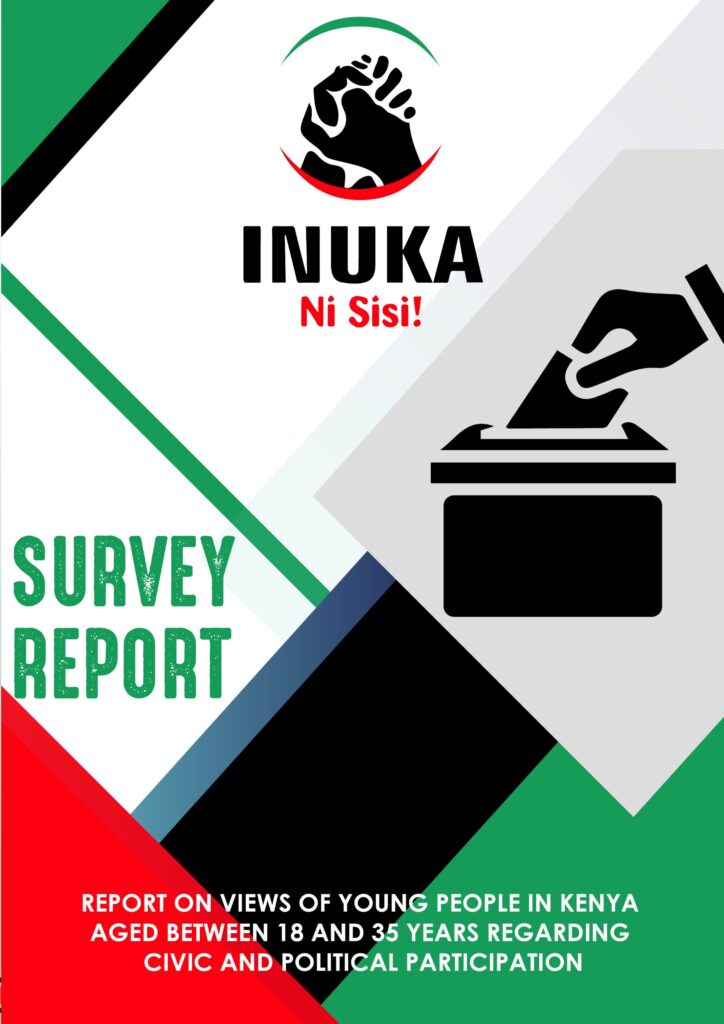
NAIROBI,Kenya – As Kenya moves steadily toward another election cycle, questions about the quality and depth of youth participation in democratic processes remain as urgent as ever. Young people make up the majority of the population and a significant share of the electorate, yet their engagement in governance continues to be largely shaped by election-period mobilisation rather than sustained participation in decision-making processes.
Across recent electoral cycles, including 2013, 2017, and 2022, youth engagement has been visible but uneven. Elections tend to attract high levels of political activity among young people, from voter registration drives to campaign participation and digital activism. However, this energy often fades after elections, raising concerns about whether young people are meaningfully integrated into governance beyond the ballot box.
Several structural and social factors continue to influence this pattern. High levels of unemployment, widespread political disillusionment, misinformation, and limited access to continuous civic education all contribute to voter apathy and weakened trust in political systems. For many young people, engagement in politics is episodic, shaped more by campaign cycles and online trends than by sustained civic learning or institutional inclusion.
Civil society and grassroots actors working in the civic space have increasingly pointed to the limitations of fragmented approaches to youth engagement. Isolated initiatives, often focused on short-term voter education or election mobilisation, have struggled to create lasting impact. As a result, there is a growing emphasis on the need for more coordinated, long-term strategies that go beyond elections.
At the centre of this thinking is a shift toward continuous civic engagement. Rather than viewing youth participation as something that peaks during elections, stakeholders are increasingly advocating for year-round approaches that embed civic education, leadership development, policy dialogue, and peacebuilding into everyday community life. The goal is to nurture informed, active citizens who can engage with governance processes consistently and constructively.
A recurring concern in these discussions is the gap between young people and institutions. Despite their demographic strength, many youth feel excluded from formal decision-making spaces, which contributes to political disengagement and mistrust. Strengthening this relationship requires more than voter mobilisation; it calls for deliberate efforts to build trust, improve transparency, and create accessible platforms for youth voices to influence policy.
The role of misinformation, particularly in digital spaces, has also become a growing challenge. As social media becomes a primary source of political information for many young people, the spread of false or misleading content can distort perceptions of governance and deepen cynicism. Addressing this requires not only media literacy efforts but also more proactive communication from institutions and civic actors.
Importantly, there is increasing recognition that youth are not a homogenous group. Their experiences, aspirations, and challenges vary widely across geography, class, education levels, and socio-economic conditions. Effective engagement strategies therefore need to reflect this diversity and avoid one-size-fits-all approaches.
As Kenya approaches another election, the central question is not only how many young people will vote, but how they will participate in shaping governance before, during, and after the electoral period. Moving from episodic engagement to sustained inclusion remains a key challenge, but also an opportunity to strengthen democratic participation in a way that reflects the country’s youthful population.
Ultimately, the future of Kenya’s democracy will depend not just on whether young people show up at the polls, but on whether systems are built to keep them meaningfully involved in the everyday work of governance.